Banned OTC & Prescription Medications by Country (2026)
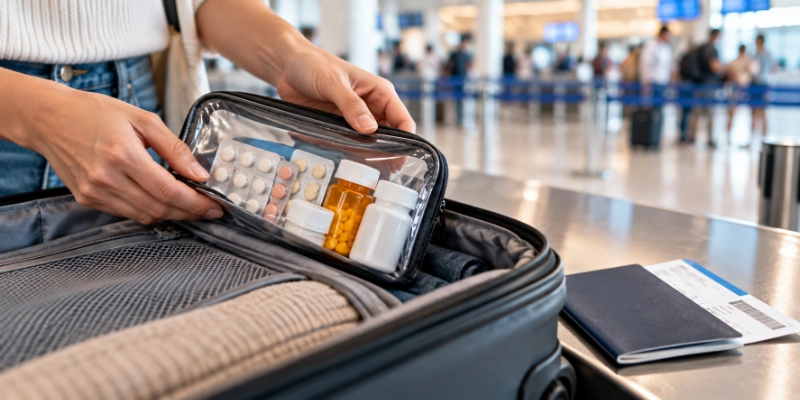
A cold tablet you can buy without a prescription at any US pharmacy can get you detained at Narita. An ADHD medication millions of people take daily is a Category 1 narcotic in Thailand, with no exception for a valid prescription. None of this is printed on the box, and none of it shows up when you google the drug name alone — it only shows up when you check the drug against the country.
This is not about illegal drugs. Every medication below is legal, common, and often over-the-counter somewhere in the world. The danger is packing it without checking what it becomes the moment you cross a border.
The three medication categories that cause problems
Almost every "banned medication" story fits into one of three drug categories. Learn these three and you can sanity-check almost any medicine before you pack it.
Non-stimulant ADHD medication (Strattera), methylphenidate (Ritalin, Concerta), and phenylephrine-based decongestants generally cause far fewer problems — they are the usual fallback when the drug above is restricted.
Pseudoephedrine & Sudafed: the cold medicine that gets confiscated
Pseudoephedrine is a precursor chemical for methamphetamine, so it is one of the most inconsistently regulated ingredients in any travel medicine kit — fine in a multi-symptom tablet in one country, a stimulant raw material at the next border.
 Japan — formulations over 10% pseudoephedrine are banned; lower-dose multi-symptom tablets are usually fine within a 2-month supply
 Mexico — pseudoephedrine products are prohibited for travellers to bring in
 New Zealand — controlled drug; travellers get a one-month-supply exemption if declared on arrival
 Australia — prescription-only in several states, quantity monitored at pharmacy level
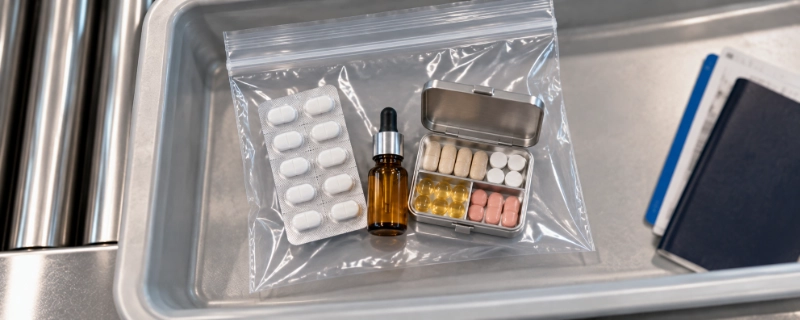
The easiest fix: check the active ingredient, not the brand name. Phenylephrine-based decongestants (often sold as "Sudafed PE") are a different drug class and are accepted almost everywhere pseudoephedrine is restricted, including Japan, Mexico, South Korea, and most of the Middle East.
ADHD stimulants: Adderall, Vyvanse, Ritalin
This is the category with the harshest penalties and the least room for negotiation. Several major destinations treat amphetamine-based ADHD medication as a narcotic, full stop — a prescription from your own doctor carries no legal weight at their border.
Japan — Adderall and other amphetamines are banned outright under the Stimulant Drug Control Act, even with a prescription
 South Korea — classed as narcotics; importing for personal use is not permitted, and amphetamine can trigger a positive meth-style drug test
 Singapore — banned; travellers need advance approval from the Health Sciences Authority before arrival
 Indonesia — banned; importing amphetamines carries a minimum five-year custodial sentence
 Thailand — classified as a Category 1 narcotic; strictly illegal to bring in under any circumstances
Codeine & opioid painkillers
Codeine sits in the amber zone almost everywhere — rarely banned outright for genuine medical use, but treated as a controlled narcotic that needs documentation, not just a pharmacy label.
 UAE — controlled narcotic; bring your prescription and medical report, and apply for a MOHAP eDrug permit at least 21 days ahead for a chronic condition
 Greece — codeine needs a doctor's prescription and, for stronger narcotics, advance authorisation from the National Organisation of Medicines (EOF)
Singapore — quantity limits apply even with a valid prescription; large amounts trigger extra scrutiny
Greece — codeine needs a doctor's prescription and, for stronger narcotics, advance authorisation from the National Organisation of Medicines (EOF)
Singapore — quantity limits apply even with a valid prescription; large amounts trigger extra scrutiny

Greece caps personal-use imports at five different prescribed medicines, no more than two boxes of each, and expects everything declared at customs alongside a doctor's note stating dosage and duration. The UAE's permit process is the strictest of the three — skip it and even a small quantity of codeine can be treated as unauthorised possession of a controlled drug.
How to get pre-approval before you fly
Every country with a permit system runs it slightly differently, but the shape is always the same: apply early, carry paper, keep everything in original packaging.
Before you fly — checklist
Medication rules change by country, quantity, and formulation, and enforcement varies by border officer. Always confirm current requirements with the destination's embassy or health ministry, and with your prescribing doctor, before you travel. Updated 2026.