Flying with Syringes, EpiPens, Insulin & Gel Ice Packs
Medications·Updated 2026·8 min read
Diabetics, allergy sufferers, and IVF patients all pack a version of this kit — the rules for it are the same regardless of which condition it's for.
Millions of travellers fly with sharps — diabetics managing insulin, allergy sufferers carrying an auto-injector, IVF patients on a hormone injection schedule. None of it is unusual to airport security, and none of it needs to be complicated, as long as you know the handful of rules that actually govern needles, injectable medication, and the ice packs that keep it cold.
The core rule: needles travel with their medication
💉
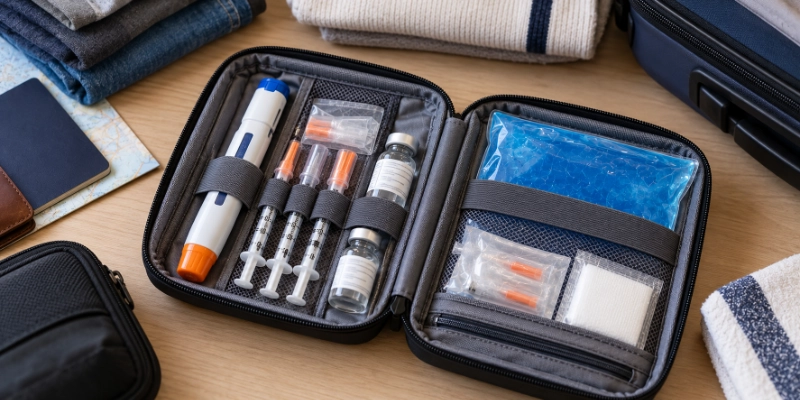
Syringes and needles are permitted in carry-on when they accompany the injectable medication they're used with. Keep them together in one clear, labelled bag or case — loose needles with no visible medication attached are what actually draws extra questions.
✅
Unused syringes, pen needles, and lancets are allowed in carry-on when packed with their medication.
✅
No prescription is strictly required for a domestic US flight, but a pharmacy label or doctor's note speeds up any conversation with an officer.
✅
X-ray screening is safe for insulin, EpiPens, and other injectable medication — it does not alter the drug.
💬
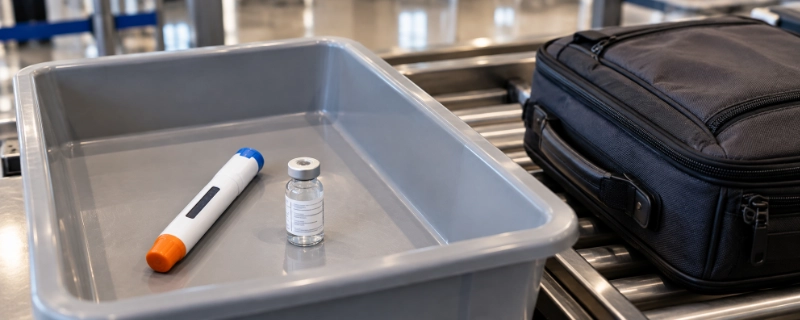
Declare sharps and injectable medication to the officer before your bag goes through the X-ray, the same as any other medical liquid.
EpiPens and auto-injectors specifically
An EpiPen (or Jext, Anapen — the auto-injector brand differs by country) is treated as medical equipment, not a weapon, but it needs to stay reachable, not buried at the bottom of a checked bag.
1
Carry it in your cabin bag, not checked luggage — you may need it mid-flight, and cargo hold temperatures can also degrade it.
2
Keep it in easy reach, not packed away under other items — crew are trained to help in an allergic reaction, but only if the device is findable in seconds.
3
You don't have to remove it from its case for screening — tell the officer what it is before the bag goes through.
4
Pack a spare where possible. Auto-injectors are single-use, and a second one covers you if the first is used or accidentally discharged.
Declared and visible beats buried and found — every time.
The frozen gel pack rule
Keeping insulin, EpiPens, or fertility hormones cold in transit means carrying a gel or ice pack — and TSA has one specific, non-negotiable requirement for it.
Frozen solid
✓ Exempt
Passes the same as the medication it's cooling
✓ No issue
Partially melted
⚠ Extra scrutiny
Treated as a liquid, may need separate screening
⚠ Can be pulled aside
Fully melted / slushy
✗ At risk
No longer covered by the frozen exemption
✗ Can be confiscated
🧊
Freeze gel packs solid the night before, and again just before you leave for the airport if you have time.
🧳
Pack them in an insulated pouch rather than loose in your bag — it slows the thaw significantly over a long journey.
✈️
On a long layover, most airport food vendors will refreeze or swap a gel pack if you ask.
Insulin pumps and CGMs
Worn devices follow their own screening logic — check your specific pump or CGM manufacturer's guidance on scanners, and ask for a pat-down instead of imaging if their guidance recommends it. Our Ozempic & injectable medications guide covers pump and CGM screening choices, and cold-chain storage for insulin specifically, in full detail.
Disposing of used sharps on the road
1
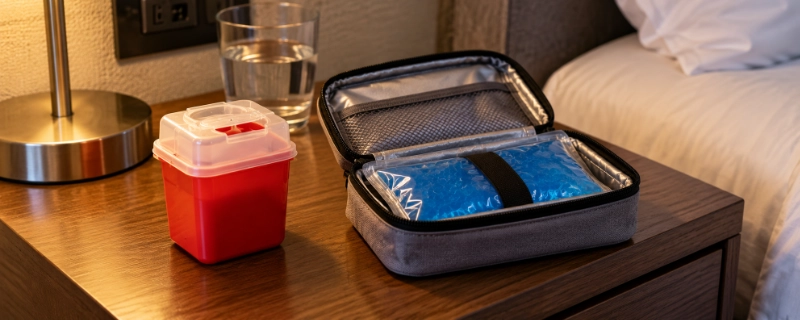
Travel with a small, rigid sharps disposal container — a purpose-made travel-size one is worth the small amount of luggage space.
2
Never drop loose used needles into a regular trash bin, in a hotel room or anywhere else — it's a real injury risk for cleaning staff.
3
Many hotels and pharmacies abroad will take a sealed sharps container for safe disposal if you ask at the front desk.
4
A capped, sealed sharps container travels back through security the same way it came — declared, in your carry-on.
The trip doesn't end at the airport — safe disposal is part of the kit too.
International travel: documentation matters more than it does at home
A few countries treat unexplained syringes with real suspicion, independent of what's inside them — carrying paperwork removes the ambiguity before it becomes a problem.
UAE — carry a doctor's letter for syringes and injectable medication; undocumented needles can draw drug-paraphernalia scrutinySaudi Arabia — same recommendation; a labelled prescription and letter avoid unnecessary questioningSingapore — generally straightforward with documentation; carry proof the syringes match a declared medical condition
Before you fly — checklist
1
Pack all syringes and needles together with the medication they belong to, in carry-on.
2
Keep EpiPens or auto-injectors within easy reach, not buried in your bag.
3
Freeze gel or ice packs solid before you leave for the airport.
4
Carry a small sharps disposal container for used needles during the trip.
5
Declare sharps and injectable medication before your bag goes through the X-ray.
6
For international travel, carry a doctor's letter and prescription documentation, especially for the Middle East and Asia.
7
Pack a spare auto-injector or extra medication where possible, in case one is lost, used, or delayed.
Screening procedures for sharps and medical devices vary by airport and country, and change without much notice. Always confirm current requirements with TSA or the relevant security authority, and with your device manufacturer, before you travel. Updated 2026.
 UAE — carry a doctor's letter for syringes and injectable medication; undocumented needles can draw drug-paraphernalia scrutiny
 Saudi Arabia — same recommendation; a labelled prescription and letter avoid unnecessary questioning
 Singapore — generally straightforward with documentation; carry proof the syringes match a declared medical condition