Australia & New Zealand Biosecurity Rules: Undeclared Food Fines
Food & Agriculture·Updated 2026·8 min read
An apple forgotten in a backpack pocket is the single most common biosecurity fine in Australia and New Zealand.
No country enforces undeclared food rules harder than Australia and New Zealand. Detector dogs, X-ray scanning on every checked and carry-on bag, and on-the-spot fines that apply the moment food is found undeclared — not after a warning, not after a second chance. An apple you forgot about, a packet of trail mix, a single loose seed in a jacket pocket: all three have triggered real fines at these borders.
This is not a country that bluffs about biosecurity. Here is exactly what gets flagged, what the fine actually costs, and how to avoid it.
Why Australia and New Zealand are this strict
Both countries are island nations that have stayed free of major agricultural pests and diseases — foot-and-mouth disease, khapra beetle, fruit fly, phylloxera — that are established almost everywhere else. Their entire agricultural export economy depends on staying that way. A single piece of undeclared fruit carrying fruit fly larvae has real potential to cost the economy billions in lost crops and export bans if it establishes itself.
🐛
This is why biosecurity screening in Australia and New Zealand is treated with the same seriousness as counter-terrorism screening elsewhere — it isn't bureaucratic caution, it's protecting a multi-billion-dollar agricultural sector.
What actually gets flagged at the border
🍎
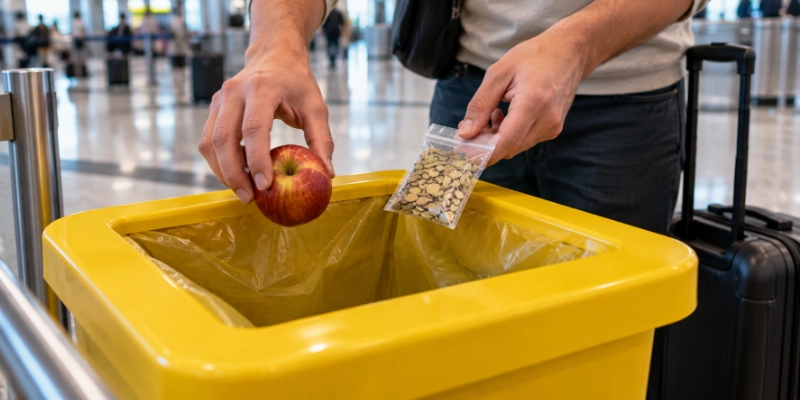
Fresh fruit & vegetables — banned in almost all cases, including the apple or orange left over from your flight meal.
🌱
Seeds, nuts in shells, plant material, soil — among the highest-risk items; even a few loose seeds in a coat pocket count.
🥩
Meat, dairy, and egg products — restricted or banned regardless of packaging, including cured meats and hard cheeses.
🍯
Honey & bee products — restricted due to bee disease risk to local hives and pollination industries.
👟
Hiking boots, camping gear, sports equipment — soil or organic matter caught in tread or fabric is a genuine biosecurity risk and gets inspected.
🐾
Wooden items, straw, animal products (feathers, skins) — can carry pests or pathogens embedded in the material itself.
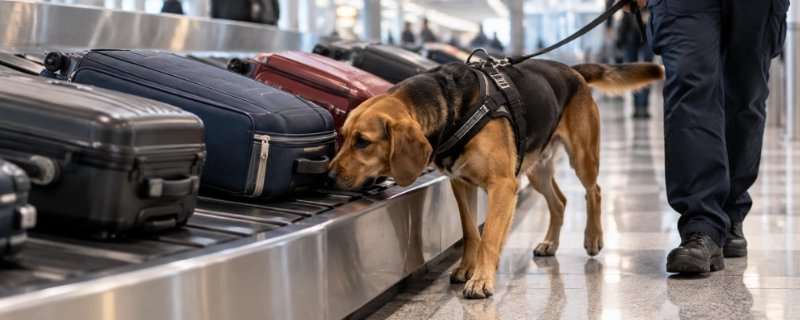
The detector dogs work the baggage carousel before you even reach the declaration desk.
How much the fine actually costs
AUD $660
Australia — standard on-the-spot infringement for undeclared biosecurity risk material
AUD $1,980–$3,960
Australia — higher tier for high-risk undeclared goods: meat, dairy, seeds, soil, wooden items
NZD $400
New Zealand — standard MPI infringement fee for failing to declare
⚠️
The fine applies for not declaring — not for having the item. Declared food is almost always just confiscated at the yellow bin, no charge. Undeclared food that's found is what triggers the on-the-spot infringement notice, with the amount set by how high-risk the item is — and concealed items (hidden or deliberately misdeclared) can trigger fines up to AUD $6,600. Repeated or large-scale non-compliance can escalate to prosecution, with maximum court-ordered penalties for individuals reaching AUD $220,000 under the Biosecurity Act 2015.
The declaration card is the whole game
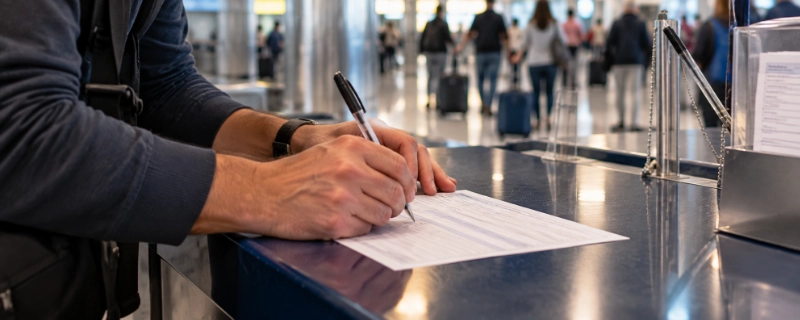
Every arriving passenger fills out an incoming passenger card asking directly whether you're carrying food, plant material, or animal products. This single answer decides everything that follows.
1
Tick “yes” if you're carrying anything even remotely food-, plant-, or animal-related — including snacks, spices, and souvenirs made from wood or animal material.
2
Declared items go through the yellow biosecurity bins at the exit — a quick visual check, usually no fine.
3
If you're unsure whether something counts, declare it anyway. Over-declaring costs nothing; under-declaring risks the fine.
4
X-ray scanning covers both carry-on and checked luggage — assume everything will be seen, not just what's in your hand luggage.
The one question on this card is what separates a confiscation from a $660+ fine.
Common items that surprise travellers
❌
Leftover in-flight meal fruit. The apple or orange from your airline meal counts as undeclared fruit the moment it leaves the plane in your bag.
❌
Muddy hiking boots or camping gear. Visible soil or plant matter on footwear is inspected and can be seized for cleaning or confiscated.
❌
Wooden souvenirs and craft items. Untreated wood can carry insects; expect inspection on carvings, masks, and instruments.
❌
Spice mixes and herbal teas. Some plant-based spice blends and loose-leaf teas fall under the same restrictions as raw plant material.
✅
Commercially packaged, shelf-stable snacks (chips, chocolate, biscuits) are usually fine to declare and pass — but still declare them.
Before you fly to Australia or New Zealand — checklist
1
Eat or dispose of any fresh fruit, vegetables, or in-flight meal leftovers before you land — don't carry them off the plane.
2
Check pockets, bags, and jacket linings for stray seeds, nuts, or plant material before arrival.
3
Clean visible soil or mud off hiking boots, tents, and camping gear before you pack them.
4
Tick “yes” on the incoming passenger card for anything food, plant, or animal related — when unsure, always declare.
5
Use the yellow biosecurity bins at the airport exit for anything you're declaring or unsure about.
6
Remember: declaring costs nothing but a confiscation. Not declaring risks an AUD $660+ / NZD $400 on-the-spot fine — more for high-risk items — or worse.
Biosecurity rules, restricted item lists, and fine amounts change periodically and are enforced strictly at Australian and New Zealand borders. Always confirm current requirements with the Australian Department of Agriculture, Fisheries and Forestry or New Zealand's Ministry for Primary Industries before you travel. Updated 2026.