Level 4 Travel Advisory Countries (2026): Live List of US Do Not Travel Countries
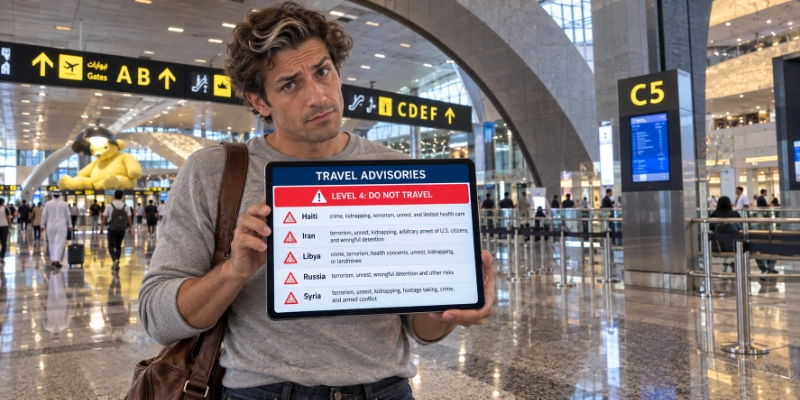
Level 4 means “Do Not Travel”: the US State Department’s highest advisory, used where the risks can be life-threatening or where the US government can do very little to help you. The list below is built straight from the State Department feed and re-checked every 6 hours, so it shows the countries at Level 4 today, not the ones a news article listed last year. For each country you get the reason the US gives in its own words, what help to expect if something goes wrong, and what the UK and Canada say, so you can decide whether to go.
🚫 Countries with a Level 4 travel advisory right now
Every card is one destination at US Level 4. The reason is the State Department’s own “due to” wording from the advisory headline. Filter by region or search a country below.
No Level 4 or Level 3 country matches that search and region.
 Afghanistan
Why (US State Department): Civil unrest, crime, terrorism, risk of wrongful detention, kidnapping, natural disasters, and limited health facilities.
Help if something goes wrong
- We urge American citizens in Afghanistan to leave immediately.
- The U.S. Embassy in Kabul suspended operations in 2021.
 Belarus
Why (US State Department): Unrest and other risks.
Help if something goes wrong
- The U.S. government has extremely limited ability to help detained U.S. citizens.
- You may not receive consular access.
UK FCDO: FCDO advises against all travel to Belarus. You face a significant risk of arrest if you have at any time engaged in any activity now considered illegal by the Belarusian regime.
 Burkina Faso
Why (US State Department): Crime, kidnapping, terrorism, and health.
Help if something goes wrong
- U.S. government employees working in Burkina Faso are not allowed to travel outside of Ouagadougou due to safety risks.
UK FCDO: FCDO advises against all travel to Burkina Faso.
 Burma
Burma
Why (US State Department): Armed conflict, unrest, arbitrary enforcement of local laws, poor health infrastructure, landmines and unexploded ordnance, and crime.
 Central African Republic
Why (US State Department): Unrest, crime, kidnapping, landmines, health, and terrorism.
Help if something goes wrong
- The U.S. government has limited ability to provide emergency services to U.S. citizens in the Central African Republic.
UK FCDO: FCDO advises against all travel to the whole of the Central African Republic, including the areas of Bimbo, Begoua and Coline, except to the capital, Bangui FCDO advises against all but essential travel to Bangui, including Bangui M’Poko International Airport.
 Chad
Chad
Why (US State Department): Crime, terrorism, unrest, inadequate health infrastructure, kidnapping, and landmines.
Help if something goes wrong
- Outside of N’Djamena, the U.S. government has extremely limited ability to provide emergency services to U.S. citizens in Chad.
UK FCDO: FCDO advises against all travel to the northern provinces of Chad: FCDO advises against all travel to the western part of Kanem Province, including the town of Nokou.
 Democratic Republic of the Congo
Why (US State Department): Health, crime, unrest, terrorism, and kidnapping.
Help if something goes wrong
- The U.S. government has limited ability to provide in-person emergency consular services to U.S. citizens in the Democratic Republic of the Congo (DRC), especially those outside of Kinshasa, due to the health and security situation.
Rule beyond the advice: Due to the Ebola outbreak in the DRC, the Department of Homeland Security has implemented new restrictions under Title 49 of the U.S. Code which prevent U.S. citizens and nationals who have been in the DRC within a 21-day period from boarding commercial flights into the United States. Travelers who have been in the DRC within 21 days of their flight will not be allowed to board flights with U.S. destinations.
UK FCDO: FCDO advises against all but essential travel to: FCDO advises against all travel to within 50km of the border with the Central African Republic.
 Gaza
Gaza
Why (US State Department): Terrorism, unrest, and limited health infrastructure.
Help if something goes wrong
- U.S. government employees are prohibited from traveling to Gaza for any reason due to safety risks.
- The U.S. government is unable to provide routine or emergency consular services to U.S. citizens in Gaza.
UK FCDO: FCDO advises against all travel to Gaza FCDO advises against all travel within 500m of the border with Gaza.
 Haiti
Haiti
Why (US State Department): Crime, kidnapping, terrorism, unrest, and limited health care.
Help if something goes wrong
- U.S. government employees working in Haiti are not allowed to travel away from the U.S. embassy for non-essential reasons due to safety risks.
- The U.S. government has an extremely limited ability to provide emergency services to U.S. citizens in Haiti because of security-related travel restrictions.
UK FCDO: FCDO advises against all travel to Haiti due to the volatile security situation. There are currently no British consular officials in Haiti and our ability to provide consular assistance is severely limited and cannot be delivered in person in Haiti.
 Iran
Iran
Why (US State Department): Terrorism, unrest, kidnapping, arbitrary arrest of U.S. citizens, and wrongful detention.
Help if something goes wrong
- U.S. citizens in Iran should leave immediately.
- There is no U.S. Embassy in Iran.
UK FCDO: FCDO advises against all travel to Iran. If you are a British national already in Iran, either resident or visitor, carefully consider your presence there and the risks you take by staying.
 Iraq
Iraq
Why (US State Department): Terrorism, kidnapping, armed conflict, crime, health risks, and the U.S. government’s limited ability to provide emergency services to U.S. citizens in Iraq.
Help if something goes wrong
- The U.S. government has limited ability to offer emergency services to U.S. citizens in Iraq due to the safety risks.
 Lebanon
Why (US State Department): Crime, terrorism, unrest, kidnapping, landmines, and armed conflict.
Help if something goes wrong
- The U.S. government has limited ability to offer emergency services to U.S. citizens in Lebanon due to the safety risks.
- U.S. citizens in these areas should leave immediately.
 Libya
Libya
Why (US State Department): Crime, terrorism, health concerns, unrest, kidnapping, or landmines.
Help if something goes wrong
- There is currently no U.S. Embassy in Libya.
- The U.S. government cannot offer emergency services to U.S. citizens in Libya due to the safety risks.
 Mali
Mali
Why (US State Department): Crime, terrorism, kidnapping, unrest, armed conflict and health.
Help if something goes wrong
- U.S. government employees working in Mali are not allowed to travel outside of Bamako due to safety risks.
UK FCDO: FCDO advises against all travel to the whole of the Mali due to the unpredictable security conditions.
 Niger
Niger
Why (US State Department): Crime, unrest, terrorism, health, and kidnapping.
Help if something goes wrong
- Due to safety risks, only essential U.S. government employees are permitted to travel to Niger.
- The U.S. government cannot offer routine or emergency services to U.S. citizens outside of Niamey due to safety risks.
 North Korea
Why (US State Department): Wrongful detention and other risks.
Help if something goes wrong
- Because the U.S. government does not have diplomatic relations with North Korea, it cannot provide direct help to U.S. citizens in North Korea in emergencies.
- Sweden serves as the U.S. protecting power in North Korea through its Embassy in Pyongyang and provides limited consular services to U.S. citizens.
Rule beyond the advice: U.S. passports cannot be used to travel to, in, or through the Democratic People's Republic of Korea (DPRK or North Korea) unless they are specially validated for such travel by the Secretary of State.
 Russia
Why (US State Department): Terrorism, unrest, wrongful detention and other risks.
Help if something goes wrong
- U.S. citizens in Russia should leave immediately The U.S. government has limited ability to help U.S. citizens in Russia, especially outside of Moscow.
- The U.S. Embassy in Moscow has reduced its staff.
 Somalia
Why (US State Department): Crime, kidnapping, terrorism, unrest and health.
Help if something goes wrong
- The U.S. government has limited ability to offer emergency services to Americans in Somalia due to the safety risks.
- U.S. government employees working in Somalia are not allowed to travel outside the Mogadishu International Airport complex, where the U.S. embassy is located, due to security risks.
UK FCDO: FCDO advises against all travel to Somalia, including Somaliland, except for the regions of Awdal, Maroodijeh, and Sahil FCDO advises against all but essential travel to the regions of Awdal, Maroodijeh, and Sahil.
 South Sudan
Why (US State Department): Unrest, crime, kidnapping, landmines, and health risks.
Help if something goes wrong
- The U.S. government has limited ability to provide emergency consular services to U.S. citizens in South Sudan due to the health and security situation Family members cannot join U.S. government employees who work in South Sudan.
UK FCDO: FCDO advises against all travel to South Sudan due to the risk of armed violence and criminality.
 Sudan
Sudan
Why (US State Department): Unrest, crime, kidnapping, terrorism, landmines, and health threats.
Help if something goes wrong
- The U.S. Embassy in Khartoum suspended its operations in April 2023 due to the outbreak of armed conflict in Sudan.
- The U.S. government cannot provide routine or emergency consular services to Americans in Sudan due to the current security situation.
UK FCDO: FCDO advises against all travel to Sudan because of the ongoing military conflict in Khartoum and other parts of the country. This does not include the Hala’ib Triangle and the Bir Tawil Trapezoid where FCDO advises against all but essential travel.
 Syria
Syria
Why (US State Department): Terrorism, unrest, kidnapping, hostage taking, crime, and armed conflict.
Help if something goes wrong
- The Czech Republic is the protecting power for the United States in Syria.
- The U.S. government cannot offer emergency or routine consular services to U.S. citizens in Syria due to the safety risks.
UK FCDO: FCDO advises against all travel to Syria due to unpredictable security conditions and the threat of terrorist attacks.
 Uganda
Why (US State Department): Crime, health, terrorism, and unrest.
Help if something goes wrong
- The U.S. government has limited ability to provide emergency consular services to U.S. citizens in Uganda due to the Ebola outbreak.
 Ukraine
Why (US State Department): The Russia-Ukraine war.
Help if something goes wrong
- The Embassy is open and operating in Kyiv; however, Embassy personnel are subject to movement, curfew, and activity restrictions, which may cause delays in provision of consular assistance to U.S. citizens outside of Kyiv.
 Yemen
Yemen
Why (US State Department): Terrorism, unrest, crime, health risks, kidnapping, and landmines.
Help if something goes wrong
- The U.S. Embassy in Sana’a suspended its operations in February 2015.
- The U.S. government is unable to provide emergency or routine consular services to U.S. citizens in Yemen.
UK FCDO: FCDO advises against all travel to the whole of the Yemen due to the unpredictable security conditions.
The list is every destination the US rates Level 4. Gaza is a territory, not a country, and is listed because the State Department rates it separately. The UK and Canada rate some of these destinations by region, so check the full advice for the exact areas. Colors compare severity inside one system only.
🧭 Where the US, UK and Canada disagree
The three governments rarely match exactly. A destination can be at US Level 4 while Canada is one step lower, or while the UK warns against only part of the country. These are the Level 4 destinations where at least one of them is not at its top level for the whole country. This list updates with the cards above.
- ChadCanada: Avoid non-essential travel
- GazaCanada: Avoid non-essential travel
- UgandaCanada: Avoid non-essential travel · UK: no warning against travel
Read the difference as a question to answer, not a loophole: ask which government has the most recent update and what it says about the specific area you would visit.
⚖️ Do not travel countries: what Level 4 means and whether you can still go
🔒 Level 4 and wrongful detention: the risk to check first
For some destinations the main danger is not crime but being arrested or held, and a government with no embassy access can do very little about it. These are the Level 4 destinations where the State Department names detention or arbitrary arrest as a reason. This list updates with the cards above.
- Afghanistan
- Iran
- North Korea
- Russia
If a country is on this list, read the full advisory for what it says about dual nationals, electronic devices and consular access before you decide.
🟧 Level 3 countries: “reconsider travel” is one step below
Level 3 is the step below Do Not Travel, and it includes destinations that many travelers do visit. A country can move between 3 and 4 when conditions change, so this list is built the same way and updates with it. The reason shown is the State Department’s own wording.
 AzerbaijanTerrorism, armed conflict, and risk of landmines. Some areas have increased riskUK: Avoid all travel (parts)UK: Essential travel only (parts)Canada: High caution+ regional advisories
 BahrainTerrorism and armed conflictUK: No warningCanada: Avoid non-essential travel
 BurundiPolitical violence, crime, and health. Some areas have increased riskUK: Avoid all travel (parts)Canada: Avoid non-essential travel+ regional advisories
 ColombiaCrime, terrorism, civil unrest, kidnapping, and natural disasters. Some areas have an increased riskUK: Essential travel only (parts)Canada: High caution+ regional advisories
 EthiopiaUnrest, crime, kidnapping, terrorism, landmines, communications disruptions, and exit bans. Some areas have increased riskUK: Avoid all travel (parts)UK: Essential travel only (parts)Canada: Avoid non-essential travel+ regional advisories
 GuatemalaCrime and terrorism. Some areas have higher risks. PleaseUK: Essential travel only (parts)Canada: High caution+ regional advisories
 Guinea-BissauUnrest, inadequate health infrastructure, and landminesUK: No warningCanada: High caution+ regional advisories
 GuyanaCrimeUK: No warningCanada: High caution
 HondurasCrime and terrorism. Some areas have an increased riskUK: No warningCanada: High caution+ regional advisories
 IsraelTerrorism, unrest and armed conflictUK: Avoid all travel (parts)UK: Essential travel only (parts)Canada: Avoid non-essential travel+ regional advisories
 JordanTerrorism and armed conflict. Some areas have increased riskUK: Avoid all travel (parts)Canada: Avoid non-essential travel+ regional advisories
 KuwaitThe threat of armed conflict, landmines, and crimeUK: No warningCanada: Avoid non-essential travel+ regional advisories
 MacauA limited ability to provide emergency consular services and a rbitrary enforcement of local law sUK: No warningCanada: High caution
 MauritaniaTerrorism, crime, and limited health infrastructure. Some areas have increased riskUK: Avoid all travel (parts)Canada: Avoid non-essential travel+ regional advisories
 NicaraguaCrime, health, wrongful detention, and arbitrary enforcement of local lawsUK: No warningCanada: High caution
 NigeriaCrime, terrorism, unrest, kidnapping, and i nconsistent availability of health care services. Some areas have increased riskUK: Avoid all travel (parts)UK: Essential travel only (parts)Canada: Avoid non-essential travel+ regional advisories
 OmanArmed conflict and terrorism. Some areas have increased riskUK: No warningCanada: Avoid non-essential travel
 PakistanArmed conflict, terrorism, crime, and kidnapping. Some areas have increased riskUK: Avoid all travel (parts)UK: Essential travel only (parts)Canada: High caution+ regional advisories
 Papua New GuineaCrime and kidnappingUK: Essential travel only (parts)Canada: Avoid non-essential travel
 QatarArmed conflictUK: No warningCanada: Avoid non-essential travel
 RwandaCrime, unrest and health risks. Some areas have increased riskUK: Essential travel only (parts)Canada: Normal precautions+ regional advisories
 Saudi ArabiaIranian drone and missile targeting of American interests, armed conflict, terrorism, exit bans, and local laws regarding social media activity. Some areas have increased riskUK: Avoid all travel (parts)UK: Essential travel only (parts)Canada: Avoid non-essential travel+ regional advisories
 TanzaniaUnrest, crime, terrorism, and targeting of gay and lesbian individuals. Some areas have increased riskUK: Essential travel only (parts)Canada: High caution+ regional advisories
 Trinidad and TobagoCrime, health, and terrorism. Some areas have an increased riskUK: No warningCanada: High caution+ regional advisories
 United Arab EmiratesTerrorism and armed conflictUK: No warningCanada: Avoid non-essential travel
 VenezuelaCrime, kidnapping, terrorism, and poor health infrastructure and natural disaster. Some areas have increased riskUK: Avoid all travel (parts)UK: Essential travel only (parts)Canada: Avoid all travel
- West BankTerrorism and unrestUK: Avoid all travel (parts)UK: Essential travel only (parts)Canada: Avoid non-essential travel+ regional advisories
For every other country, see the full table in travel warning by country, and for the islands see travel warning Caribbean.
🧳 If you decide to travel anyway, or you are already there

❓ Quick answers
What is a Level 4 travel advisory?
It is the highest of the four levels used by the US State Department, called “Do Not Travel”. It is used where the risks can be life-threatening or where the US government has very limited ability to help Americans. It is advice, not a legal ban.
Which countries have a Level 4 travel advisory?
The section “Countries with a Level 4 travel advisory right now” above lists every destination the State Department rates Level 4, with its reason. The list is rebuilt from the official feed every 6 hours, so it is current.
What are the “do not travel” countries?
“Do not travel” is the State Department’s wording for Level 4. The UK says “advises against all travel” and Canada says “avoid all travel”. The cards show all three for each country.
What is the difference between Level 3 and Level 4?
Level 3 is “reconsider travel” and Level 4 is “do not travel”. Level 4 is used for the most serious risks, and often where the US can provide little or no emergency help.
Is it illegal to travel to a Level 4 country?
Generally no: advisories are advice. Some advisories add real rules, for example a restriction on using a US passport for a destination or a rule for flying back to the US. Those are shown on the country’s card as “Rule beyond the advice”.
Will my travel insurance cover me in a Level 4 country?
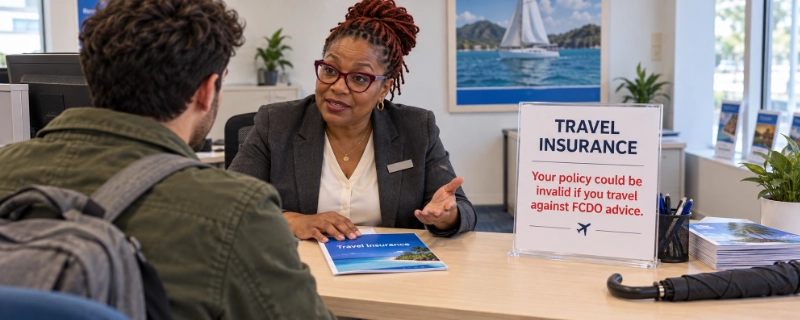
Often not by default. The UK government warns that insurance could be invalidated if you travel against FCDO advice. Read your policy’s exclusions and ask your insurer before you book.
What should I do if I am already in a Level 4 country?
Read the card for your country: some advisories tell citizens to leave immediately, and Canada says to think about leaving if it is safe to do so. Enroll with your government’s traveler program, tell family where you are, and follow instructions from your embassy.
Where does the reason for each country come from?
From the US State Department advisory itself: the “due to” line in the headline and the statements about embassy help. The UK status comes from the GOV.UK foreign travel advice API and Canada’s from its travel advice data. Nothing is typed in by hand.
Checked October 2026 from official government data. Advice can change within hours in a crisis: always confirm on the government’s own page before you travel.