Is Deodorant a Liquid? TSA Rules for Deodorant, Mascara, Toothpaste & More
Packing Rules·Updated 2026·7 min read
One of these goes in the bag. The other doesn't. They sit right next to each other on the shelf.
“Is gel deodorant a liquid?” is one of the most searched airport security questions there is — and the honest answer is yes, almost every time, while the stick version sitting next to it on the shelf isn't a liquid at all. The 100ml rule doesn't care what a product is for. It cares what it does when you tip it upside down.
The one test that settles almost every borderline case
💡
If it flows, spreads, smears, sprays, or can be poured, it's a LAG (liquid, aerosol, or gel) and falls under the 100ml limit. If it's solid and keeps its shape on its own, it isn't. That single test resolves almost every cosmetics question at security.
The item-by-item verdict
🚫
Gel deodorant / antiperspirant — a LAG. Counts toward the 100ml limit, goes in the liquids bag.
✅
Stick / solid deodorant — not a liquid. No limit, no bag required.
🚫
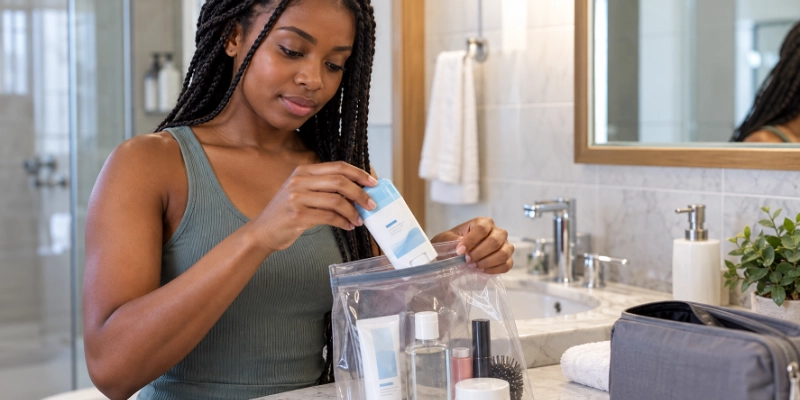
Mascara — a LAG. Most tubes are well under 100ml already, but it still needs to go in the liquids bag with everything else.
🚫
Toothpaste — a gel, treated exactly like a liquid. A travel-size tube under 100ml is fine in the bag; a full-size tube is not.
✅
Lip balm / chapstick (solid stick) — not a liquid.
✅
Lipstick (solid bullet) — not a liquid.
🚫
Liquid lipstick / lip gloss — a LAG, goes in the bag.
🚫
Cream foundation / cream blush — a LAG.
✅
Pressed powder / powder blush / eyeshadow compact — a solid, not a liquid, no limit.
🚫
Dry shampoo (aerosol spray) — an aerosol, treated the same as a liquid.
🚫
Brow gel / clear mascara-style gels — a LAG.
🚫
Perfume / cologne (spray or liquid) — a LAG.
✅
Solid perfume (balm in a tin) — not a liquid.
The trap even small tubes fall into
A tiny mascara tube or a mini lip gloss almost never comes close to 100ml, so in practice it sails through — but that's about the container's printed capacity, not about how little product is left inside. A half-used 150ml foundation bottle is still a 150ml container, and it will be pulled at the tray exactly like a full one.
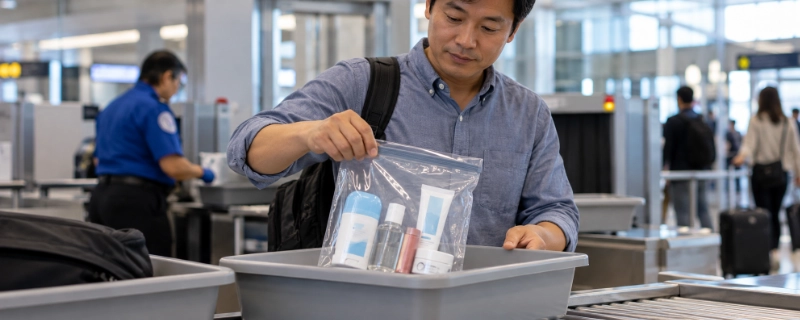
The bag comes out before the tray, not after an officer asks for it.
Smart swaps that skip the whole question
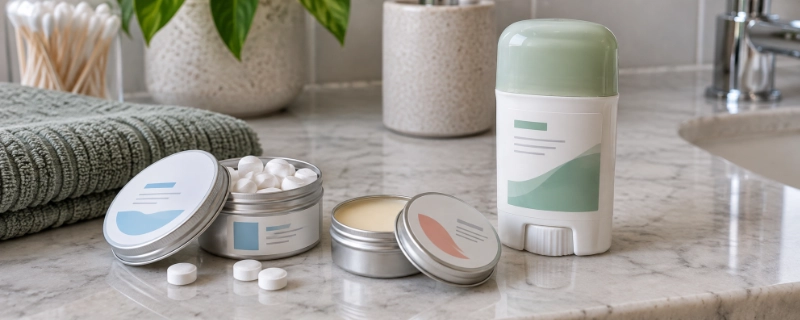
The easiest way to stop worrying about the gel-vs-solid line is to not carry the gel version at all — several everyday products now come in a solid form that performs the same job.
1
Swap gel or roll-on deodorant for a solid stick — skips the liquids bag entirely.
2
Toothpaste tablets or toothpaste powder aren't LAGs — a compact swap for a full tube.
3
A solid perfume balm replaces a spray bottle with zero bag-space cost.
4
Pressed powder foundation instead of liquid or cream foundation avoids the 100ml question altogether.
5
Shampoo and conditioner bars replace bottles — not LAGs, and useful beyond just the flight.
Every item here skips the liquids bag — and most of them take up less space too.
Before you fly — checklist
1
Apply the flow/spread/smear/pour test to anything borderline before you pack it.
2
Sort gel deodorant, mascara, toothpaste, and any cream cosmetics into the 100ml liquids bag.
3
Solid sticks, pressed powders, and bar-format toiletries can go anywhere in your carry-on, unlimited.
4
Check the printed container size, not the fill level — a half-empty oversized bottle still counts as oversized.
5
Consider solid or bar swaps for deodorant, perfume, and toothpaste to free up liquids-bag space for everything else.
Screening judgment on borderline cosmetics can vary by officer and airport. When in doubt, treat an item as a LAG and pack it in your liquids bag. Always confirm current requirements with TSA or the relevant security authority before you travel. Updated 2026.