Can You Bring Aerosols on a Plane? (2026 TSA Rules)
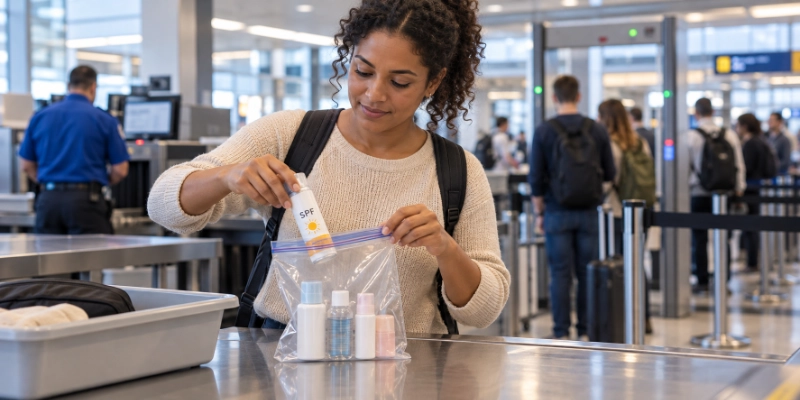
Hairspray, dry shampoo, sunscreen spray, spray deodorant — at the security checkpoint, every one of these is just another liquid, capped at 100ml (3.4oz) per container in your carry-on. That part is well known. What catches people out is the second, separate rule that kicks in the moment an aerosol goes into a checked bag instead: a per-container size cap, a total quantity cap across everything you pack, and a list of aerosols that are not allowed in the aircraft hold at all, toiletry or not.
Carry-on: the same 100ml rule as every other liquid
An aerosol in your carry-on follows the standard liquids, aerosols and gels (LAG) rule: each container must be 100ml (3.4oz) or smaller, and it has to fit inside your one quart-sized resealable bag along with everything else. There is no separate aggregate limit here — if a 90ml can of dry shampoo and a 100ml spray sunscreen both fit in the bag, both can travel. The printed size on the can is what counts, not how much product is left inside, so a half-empty 200ml can still fails the checkpoint.
Whether a specific cosmetic counts as an aerosol or gel or solid in the first place is its own question — see our full breakdown of deodorant, mascara and toothpaste if you are unsure whether an item needs to go in the bag at all.
Checked baggage: a bigger allowance, but not an unlimited one
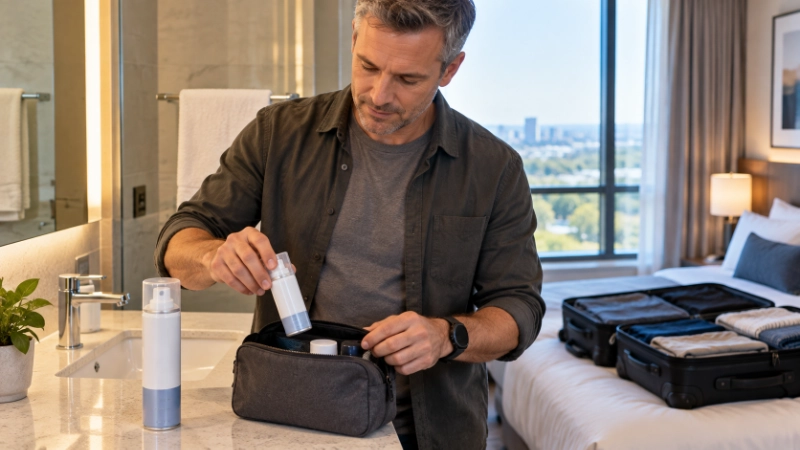
Move an aerosol into checked luggage and the 100ml carry-on cap disappears — but two new limits take its place. Each individual container can hold up to 500ml (18oz), and the combined total of every aerosol and other restricted toiletry in that bag cannot exceed 2kg or 2 litres (70oz/68 fl oz) per passenger. The spray nozzle also has to be protected by its cap or another method that stops it from triggering accidentally inside the bag.
- TSA allows one container up to 4oz (118ml) in checked baggage only — never in carry-on, no exceptions — and it must contain no more than 2% CS or CN by mass, with a safety mechanism against accidental discharge.
- Meeting the TSA limit is not the same as being allowed to fly with it: several US airlines, including United, JetBlue and Southwest, ban pepper spray from checked baggage entirely regardless of what TSA permits.
- Outside the US, most countries and airlines prohibit self-defense sprays in any form of luggage. Check your destination before you pack one.
The cap rule almost nobody follows
Both the FAA and TSA require the release valve on any aerosol in checked baggage to be protected against accidental discharge — in practice, this means the cap that came with the can, or tape over the nozzle if the cap has gone missing. An aerosol rattling around a suitcase with an exposed trigger is exactly the scenario the rule exists to prevent, and a screener who spots one without protection can pull the whole bag for a manual check.
Aerosol rules are set by TSA and the FAA in the US, but individual airlines and destination countries can add their own restrictions on top. Confirm the current requirements with TSA and your airline before you fly. Updated 2026.