Customs Declaration Forms by Country (2026): What to Fill In, Online or Paper
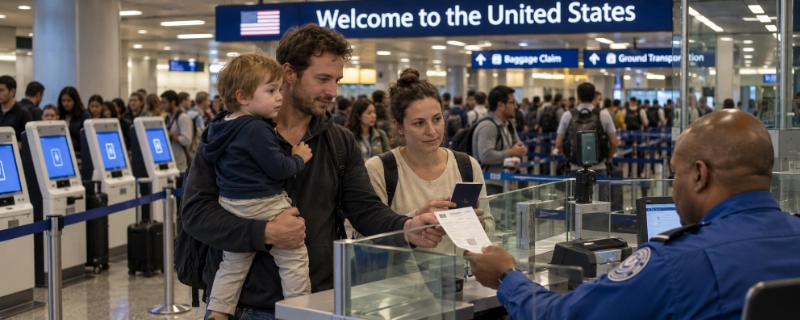
Almost every country asks arriving travellers to declare what they are bringing in. What changes is the paperwork: some hand you a card on the plane, some want an online form before you fly, and some have no form at all — just a red and a green exit. This guide compares eight popular destinations so you know what to fill in, and when.
The short version: if you carry food or plants, goods above your duty-free allowance, goods for resale or cash above the country’s threshold, the answer is Yes. When in doubt, declare it.
Customs declaration form by country
Search below to jump to a country page, or scroll the table. Forms and thresholds come from each country’s own customs, border or biosecurity authority.
| Country | Form | Online option | Who must fill it in | Report cash from |
|---|---|---|---|---|
 United States United States | CBP Declaration Form 6059B | Global Entry kiosk (members only) | Every traveller; one form per immediate family | $10,000 or more |
 Canada Canada | Declaration Card E311 (or airport kiosk) | Advance Declaration in ArriveCAN, up to 72 hours before (selected airports) | Everyone arriving by air | C$10,000 or more |
 United Kingdom United Kingdom | No paper form – red or green channel | Online declare-and-pay service, up to 5 days before | Anyone with goods over the allowance or cash to declare | £10,000 or more |
 Australia Australia | Incoming Passenger Card (IPC) | Australia Travel Declaration (digital pilot, selected Qantas flights) | All travellers | A$10,000 or more |
 New Zealand New Zealand | New Zealand Traveller Declaration (NZTD) | Online or NZTD app; paper form if you can’t | Everyone, including NZ passport holders | NZ$10,000 or more |
 Singapore Singapore | SG Arrival Card (plus Customs@SG for goods) | Online/MyICA app, within 3 days before arrival | Everyone arriving (with limited exceptions) | S$20,000 or more |
 United Arab Emirates United Arab Emirates | Customs Declaration Form (cash over AED 60,000) | iDeclare app | Passengers 18+ carrying cash or valuables over the limit | AED 60,000 or more |
 Japan Japan | Customs Form C-5360 or Visit Japan Web QR code | Visit Japan Web (recommended, optional) | Every passenger; one paper form per family | ¥1,000,000 or more |
We don’t cover that country yet. See the countries we cover.

What nearly every form asks
How it works in each country
Red channel or green channel?
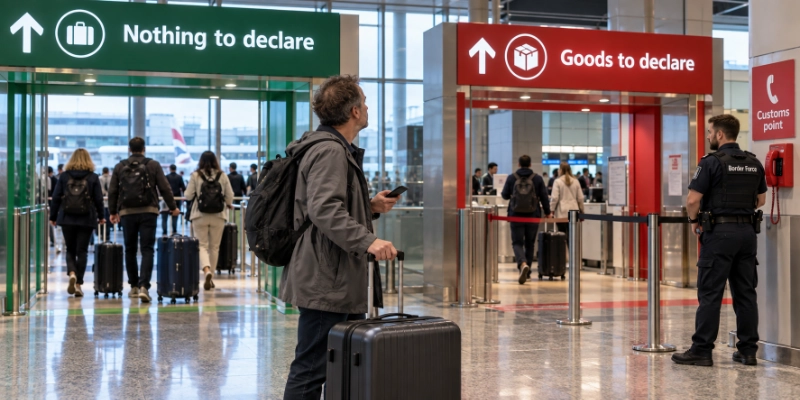
Many airports skip the form and use two exits instead. Green means nothing to declare; red means you have goods or cash to declare. The UK describes it this way, and the UAE adds that passing through either channel is treated as a customs declaration in itself — so choosing green while carrying something undeclared is a false declaration.
Before you land — checklist
Forms, online services and thresholds change, and each customs authority has the final word. Always confirm the current requirements with the authority of the country you are entering before you travel. Updated 2026.